Our meat, no hand-waving

Why our meat is different

Industrial beef reaches the table through a long and opaque chain. Hormones, routine antibiotics, GMO grain, feedlots, color treatments. At Tekorá our answer to each of those practices is the same: we don't use them.

Last reviewed: April 21, 2026

24

concerns addressed

0

shortcuts taken

100%

publicly documented

24 concerns, tap any to jump

Each tile links to the full answer below.

Braford cattle grazing on Paraguayan pasture at golden hour

Part 1

How we raise the animal

What we give and don't give our cattle throughout life.

01 Hormones

Do you use growth hormones?

0

Growth hormones, steroid implants, beta-agonists

At no age, at no stage, in no animal.

Full reasoning + sources

No. Tekorá uses no growth hormones or steroid implants at any point in the animal's life.

In several countries, estradiol, trenbolone, and zeranol implants are legal and common for accelerating finishing. The European Union banned them in 1989. Paraguay permits some, but we don't use any. Our cattle gain weight at the pace pasture allows, not at the pace a feedlot demands.

02 Antibiotics

Do you use routine antibiotics?

Industrial approach

Withdrawal period, animal returns to supply

Tekorá approach

Treated animal permanently removed

Full reasoning + sources

No. Antibiotics are used only to treat individual sick animals, and those animals are removed from our supply.

Prophylactic antibiotic use, giving antibiotics to healthy animals to prevent disease in crowded pens, is a primary driver of antimicrobial resistance, a global public health concern recognized by the WHO. Rotational pasture raising removes most of the justification for that practice. If an animal gets sick, we treat it, but that animal leaves the Tekorá program.

03 Vaccines

Do you use mRNA vaccines in livestock?

What we use (SENACSA-mandated)

  • Foot-and-mouth (aftosa), twice yearly
  • Brucellosis RB51 in breeding females

What we don't use

  • mRNA livestock vaccines
  • BVD, IBR, respiratory
  • Leptospirosis, campylobacter
  • Any other discretionary vaccine
Full reasoning + sources

No. We use no mRNA vaccines. The only vaccines we administer are those required by SENACSA: foot-and-mouth and brucellosis in breeding females.

There are currently no commercial mRNA vaccines approved for Paraguayan cattle. If that changes, we'll continue to decline them unless they become mandatory. We publish the exact list of what we do use: foot-and-mouth vaccination (twice yearly, SENACSA-mandated) and brucellosis RB51 in breeding females. That's the full list.

04 Pesticides

Could the feed contain glyphosate or pesticide residues?

Industrial approach

Grain feed from sprayed corn & soy

Tekorá approach

100% pasture. Zero crop-residue exposure.

Full reasoning + sources

No. Our cattle eat pasture, not grain. With no sprayed-crop feed in the chain, there's no glyphosate exposure route.

Much of the glyphosate-in-beef issue stems from feed: corn and soy sprayed with herbicides. Because our cattle eat only pasture, they sidestep that chain entirely. We also don't use glyphosate on the ranch for pasture management, weed control is mechanical and rotational.

05 GMO

Do the animals eat GMO corn or soy?

Industrial approach

Grain-finishing on GMO corn & soy

Tekorá approach

Grass-finished, birth to harvest.

Full reasoning + sources

No. Our cattle are 100% grass-finished. No corn, no soy, no silage, no derivative of GMO crops, ever.

In many markets the "grass-fed" label permits grain-finishing in the final weeks before slaughter. That practice erases most of the nutritional benefits (fatty-acid profile, CLA, omega-3). Tekorá is grass-finished: pasture start to finish.

06 Feedlot

Do the animals go through a feedlot?

Industrial approach

Confined feedlot finishing

Tekorá approach

Rotational pasture, whole life.

Full reasoning + sources

No. Our cattle never enter a feedlot. They live on rotational pasture from birth to harvest.

The CAFO (Concentrated Animal Feeding Operation) model is efficient at moving cheap meat to market, but it introduces stress, density-driven disease, and the need for prophylactic antibiotics. Our model is the opposite: low stocking rate, rotated pastures, clean water, natural shade.

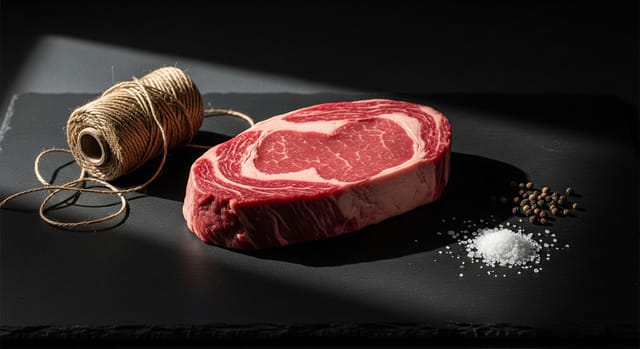
A whole-muscle beef cut on dark charcoal slate with natural light

Part 2

What we don't do to the meat

Industrial processing tricks we avoid once the animal is harvested.

07 Mechanical meat

Do you sell pink slime or mechanically separated meat?

Industrial approach

LFTB + mechanically separated meat

Tekorá approach

Whole muscle only. Zero industrial blends.

Full reasoning + sources

No. We sell only whole cuts or whole-muscle ground beef. No LFTB, no ammonia-treated trim, no mechanically separated meat.

LFTB ("lean finely textured beef," known as pink slime) is an ammonia-gas-treated byproduct blended into industrial ground beef. Mechanically separated meat is pressed muscle paste used in sausages and prepared foods. Neither enters Tekorá.

08 Color treatment

Do you use carbon monoxide to preserve the red color?

Industrial approach

CO gas to fake cherry-red color

Tekorá approach

Plain vacuum seal. Natural color.

Full reasoning + sources

No. We vacuum-seal without color-modifying gases. If the color darkens over time, that's normal.

Carbon monoxide modified-atmosphere packaging keeps beef cherry-red even when it's weeks old. It's legal in the US and Paraguay; the EU prohibits it. We prefer simple vacuum sealing without added gases, color may shift but the visual indicator of freshness stays meaningful.

09 Bleaching

Do you treat meat with ammonia or bleach?

Industrial approach

Ammonia/chlorine antimicrobial washes

Tekorá approach

Hygiene + cold chain. No chemicals.

Full reasoning + sources

No. No Tekorá product passes through ammonia, sodium hypochlorite, peracetic acid, or any other antimicrobial wash.

These treatments are used industrially to reduce bacterial load on rapidly-processed meat. We reduce bacterial load the opposite way: scrupulous slaughter hygiene, immediate cold chain, and healthy animals (E. coli loads are lower in low-stress, low-density production).

10 Meat glue

Do you use transglutaminase (meat glue)?

Industrial approach

Trim glued into fake whole steaks

Tekorá approach

Whole muscle. No transglutaminase.

Full reasoning + sources

No. All our steaks are whole-muscle. We never glue trim into formed cuts.

Transglutaminase fuses meat trimmings and is sold as whole steaks. Legal in many countries including Paraguay. For us, non-negotiable: a steak is a steak, not an assembly.

11 Water injection

Do you inject water, brine, or solutions to inflate weight?

Industrial approach

Up to 15% of weight is injected brine

Tekorá approach

Real weight. Cut exactly as sold.

Full reasoning + sources

No. The net weight you pay for is the real cut weight. No solutions, no added water, no plumping.

Enhanced meat or meat plumping injects saline solution (water + salt + phosphates) that can account for up to 15% of billed weight. Legal with proper labeling, but many consumers don't notice. Our meat ships as cut, without solutions.

Macro close-up of native pasture grass with dew droplets at dawn

Part 3

Risks we eliminate at source

Contaminants and pathogens kept out by how we design the system, not by post-hoc cleanups.

12 Heavy metals

Could the meat contain heavy metals?

Full reasoning + sources

Risk is low for pasture-raised on non-contaminated soil. We test soil and forage annually and publish the results.

Cadmium, lead, and arsenic can reach meat via forage contaminated by nearby industry, groundwater, or agricultural sludge. Our ranch sits far from industrial zones; we still test soil and pasture yearly at a certified lab. Results publish on /traceability.

13 Microplastics

Does beef contain microplastics?

Industrial approach

Processed feed bags + industrial water

Tekorá approach

Open pasture + uncontaminated groundwater.

Full reasoning + sources

Exposure in pasture-raised ruminants is structurally lower than in feedlot cattle eating processed feed, or ocean fish.

Microplastics enter the food chain primarily via processed feed (bags, silo bags, containers) and industrial water. An animal eating open pasture, drinking uncontaminated groundwater, and never touching formulated feed has a much shorter exposure path. We don't claim "zero microplastics", that's unverifiable, but we eliminate the known routes.

14 Residues

Are there antibiotic residues in the meat?

Industrial approach

Withdrawal periods to dodge residue limits

Tekorá approach

Treated animals exit the supply permanently.

Full reasoning + sources

No. Because we don't administer routine antibiotics, there's no withdrawal period to manage. Treated animals exit the program.

In industrial beef there's a "withdrawal period" between the last antibiotic treatment and slaughter so residues fall below legal limits. The system works on paper, but management errors happen. We dodge the problem at the root: no routine use means no residues to manage.

15 Mad cow

Is there any BSE (mad cow) risk from ruminant byproduct feeding?

Industrial approach

Meat & bone meal in ruminant feed

Tekorá approach

Only pasture and mineral salt.

Full reasoning + sources

No. Our animals eat only pasture. They've never consumed meat and bone meal or any animal byproduct.

Bovine Spongiform Encephalopathy (BSE) is linked to feeding ruminants with meat and bone meal, a practice most countries have restricted since the 90s, but not fully eliminated. We go beyond the regulation: our animals consume only pasture and mineral salt.

16 Pathogens

What do you do about E. coli, Salmonella, Listeria?

Industrial approach

Feedlot crowding raises E. coli loads

Tekorá approach

Pasture origin + continuous 0–4°C chain.

Full reasoning + sources

We reduce risk at source: pasture-raised cattle show lower E. coli O157:H7 prevalence, and we keep a strict cold chain from slaughter.

Studies in the Journal of Food Protection and USDA research show grain-fed feedlot cattle carry higher rates of pathogenic E. coli than pasture-raised cattle, due to rumen pH differences. Our slaughter protocol includes mandatory SENACSA veterinary inspection pre and post-mortem, chilled quartering, and continuous 0–4°C cold chain to your door.

Hand holding a Tekorá-labeled brown-paper meat package over a wooden table

Part 4

Honesty and labeling

What's on the package is what's in the package. Welfare, aging, certifications, all disclosed.

17 Labeling

How do I know I'm getting what the label says?

Full reasoning + sources

Every cut carries a lot code tied to the animal, ranch, and slaughter date. Ask at any time and we'll tell you which animal it came from.

Species substitution and mislabeling are common in processed or long-chain meat. Our chain is short and documented: one animal, one ranch, one lot. Full traceability on /traceability.

21 Welfare

How do you guarantee animal welfare?

Full reasoning + sources

Low-stress handling throughout life, low pasture density, short transport to slaughter, and veterinary inspection at every stage.

Chronic or acute stress before slaughter affects muscle pH and final meat quality ("dark cutter" or DFD meat). Beyond the ethical argument, welfare is quality: a calm animal produces better meat. Our protocols follow Temple Grandin's principles: low stress, shade and water always available, non-violent handling.

22 Aging

What kind of aging do you use?

Typical aging windows
Wet-aged (vacuum) 7–14 days
Dry-aged (cooler) 14–28 days
Full reasoning + sources

Dry-aged 14 to 28 days on select cuts. For everyday cuts, wet-aged 7 to 14 days. Always labeled.

Dry aging concentrates flavor and improves tenderness via natural enzymes but reduces yield through evaporation and trimming. Wet aging (vacuum) is more efficient and appropriate for everyday cuts. For every cut we tell you which aging it underwent and for how many days.

23 Certification

Are you certified organic?

Full reasoning + sources

In Paraguay, organic beef certification is complex and expensive. We're not currently certified. What we do instead is publish the full protocol so you can audit it yourself.

USDA Organic or equivalent European certification requires multi-year documentation, inspections, and fees that are often prohibitive for operations our size. We've prioritized actual compliance over the seal: our protocol meets or exceeds USDA Organic standards. We'll pursue certification later; for now, we offer operational transparency as the guarantee.

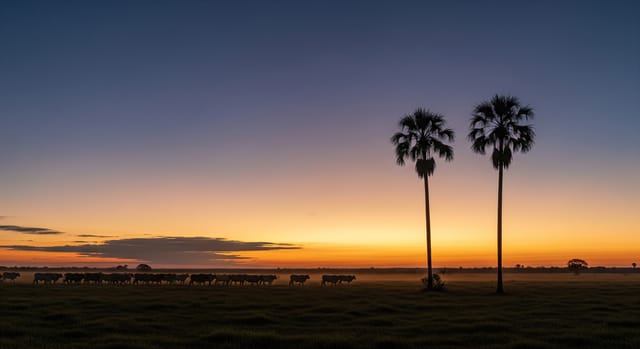
Wide Paraguayan Chaco at dusk with cattle silhouettes and carandá palms

Part 5

Paraguay specifically

Local context, imports, deforestation, regulatory gaps, and how we address them.

18 Imported feed

Does your feed come from Brazil, which has had contamination scandals?

Industrial approach

Imported feed with contamination history

Tekorá approach

Zero feed imports. Local pasture only.

Full reasoning + sources

We don't use feed. Period. Our animals eat only local pasture. That risk route is structurally eliminated.

Paraguay imports significant amounts of formulated feed from Brazil, with documented contamination episodes and quality variability. Because we use no formulated feed, that risk category doesn't exist for Tekorá.

19 Deforestation

Does your cattle come from deforested Chaco or Amazon land?

Industrial approach

New-frontier ranching on cleared land

Tekorá approach

Fields opened decades ago. Satellite-verified.

Full reasoning + sources

No. Our ranch operates on established fields with no recent deforestation. We'll document the soil history with dated satellite imagery.

Paraguay is on the international radar for cattle-driven deforestation, particularly in the Chaco. We work fields opened decades ago; we do not participate in or finance frontier expansion. We'll publish archival satellite imagery showing soil-use continuity.

20 SENACSA

SENACSA has regulatory gaps. How do I know you actually comply?

Full reasoning + sources

We comply with SENACSA and publish what we do beyond what's required. Full protocol on /how-we-raise.

SENACSA regulates Paraguayan beef production and slaughter, but its controls are minimal compared to USDA or European systems. We meet the requirements and publicly detail everything we do above them: feed, handling, vaccination, transport, slaughter. The audit is public transparency.

24 Bottom line

So what do you actually do differently?

Full reasoning + sources

What we choose not to use: hormones, routine antibiotics, grain, feedlot, chemical treatments, meat glue. What we do: pasture, low stress, traceability, public transparency.

The list above reads as 25 "no"s. But the "yes" is simpler: raise cattle the way the animal's biology and the soil's ecology permit, and tell you exactly what we did. If you have a question not covered here, message us.

Where we fit in the market

Four tiers, one honest side-by-side

Paraguayan beef sits on a steep ladder, from commodity supermarket cuts to imported specialty beef. Below is what each tier typically delivers on the five dimensions that decide real quality. No brands named; we're describing how the tiers work.

Commodity supermarket

Price-first, anonymous supply chain

Feed
Conventional; grain-finishing common, not disclosed.
Hormones / antibiotics
Domestic-market baseline. Hormone use generally undisclosed.
Origin disclosure
Packaged by the chain, not the producer. Ranch origin almost never on the label.
Aging transparency
Not stated.
Traceability
Group-level. SIAP rollout ongoing.
Gs. 30,000–45,000 / kg

Neighborhood butcher

Community trust, relationship-based

Feed
Typically conventional. Grass claims, if any, are oral.
Hormones / antibiotics
Rarely disclosed. Trust depends on the butcher personally.
Origin disclosure
Depends on the butcher's own relationships. Occasionally specific, usually not.
Aging transparency
Rarely stated.
Traceability
None to group-level.
Gs. 40,000–65,000 / kg

Premium butcher / boutique

Marketing-forward, disclosure-light

Feed
"Pastura" or "grass-fed" claimed, grass-finishing rarely confirmed.
Hormones / antibiotics
"Calidad de exportación" is the common phrase. Specific protocols seldom published.
Origin disclosure
Breed certification (Brangus, Braford) common; ranch name rare.
Aging transparency
"Madurado" as a claim; days and method rarely on the label.
Traceability
Batch-level. SITRAP for export cuts when applicable.
Gs. 65,000–110,000 / kg

Specialty imports

Argentine / Uruguayan aged beef

Feed
Grass-fed programs exist in source countries; documentation varies.
Hormones / antibiotics
Source-country regulation applies. EU-origin imports hormone-free.
Origin disclosure
Country of origin required; ranch-level detail uncommon.
Aging transparency
Aging often stated, days varies.
Traceability
Source-country systems; not always documented for the Paraguayan buyer.
Gs. 100,000–180,000 / kg
Tekorá

Tekorá

Grass-finished, published, verifiable

Feed
100% pasture from weaning to harvest. Native hay in dry season. Never grain.
Hormones / antibiotics
Zero hormones, no routine antibiotics. Treated animals exit permanently.
Origin disclosure
Ranch region, breed, and (soon) named SENACSA facility all published.
Aging transparency
Wet 7–14 days or dry 14–28 days, stated on every package.
Traceability
Per-animal lot code. SIAP + ARP Carne Natural target; third-party audit in progress.

Gs. 58,000–95,000 / kg

Price bands reflect Asunción metro, April 2026. Dimension descriptions reflect our audit of publicly available disclosure for seven Paraguayan premium brands, accurate to how those tiers typically operate, not to any specific brand.

Questions we haven't covered?

Message us on WhatsApp, we'll answer every question about our beef with the same level of detail.